linkedin-skills
11 Claude Code and Codex skills that write human-sounding LinkedIn posts, comments and profiles.
View on GitHub →
for humans and AI agents
Private repos, agent skills and the ideas behind them — from a founder whose six-person team runs content for B2B companies like a 30-person agency.
Leave an email and you will hear when it opens. That is the whole of it — no drip sequence, no course.
bulaev.ai is a paid membership for people building their own AI operating system — the private repos, agent skills, ideas database and working processes I run my company on. It is for founders, operators, marketers and developers who want the working tools, not a course about them.
01Who is writing this
Serge Bulaev — founder of Creative Content Crafts. A grocery app millions used every week, a media platform that reached thirty million a month before its sale in 2020, and now an AI-native content company. The tools we needed and couldn’t buy, we shipped ourselves.
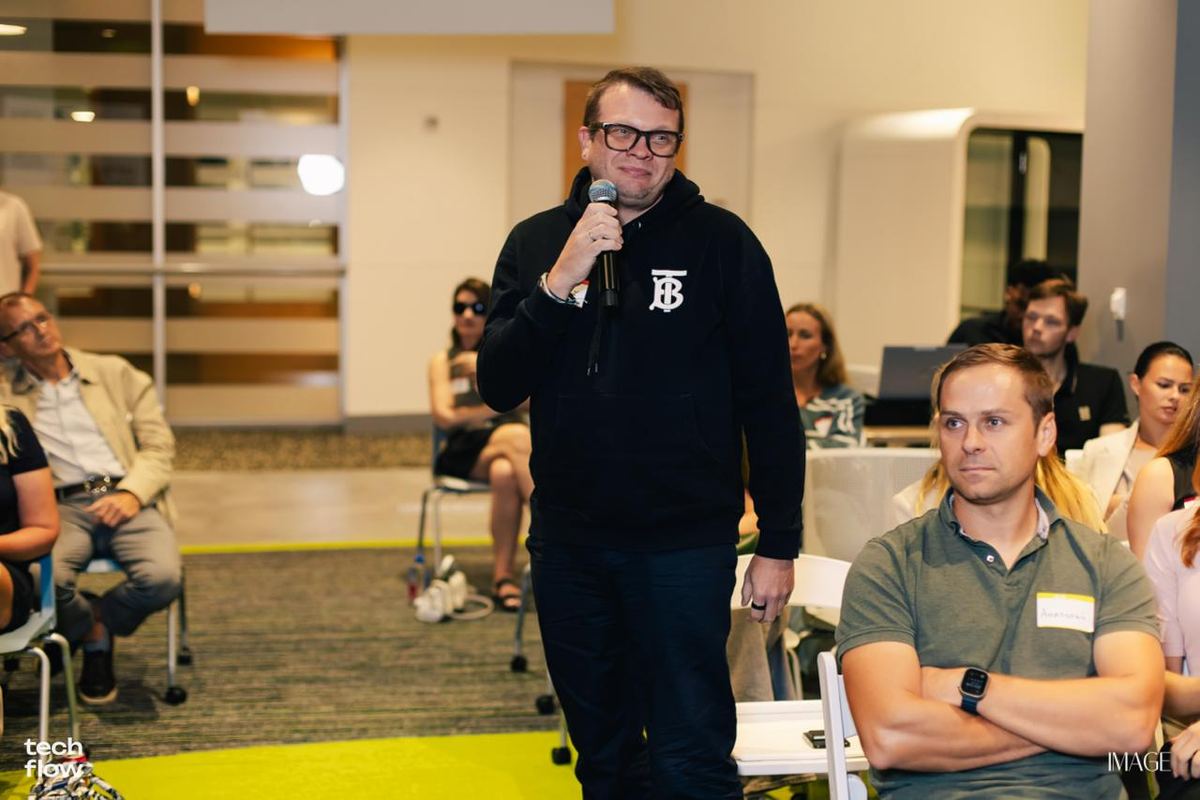 #TechFLOW · Fort Lauderdale · 2025
02What's inside · Serge's AI OS
Not a course. The repos, skills and processes I run Creative Content Crafts on, organised the way I use them.
LinkedIn engagement engine, research agent, editorial pipeline skills.
Claude Code setups, agent kits, Cloudflare boilerplates we ship products on.
How six people and a fleet of agents run like a 30-person agency.
Memory, knowledge bases, daily routines and the company-wide layer.
The research agent, LinkedIn engagement tooling and Claude Code skills my team uses daily. Git access is the piece still being connected, so there is nothing to clone yet — this card changes the day there is.
Deep dives on content pipelines, agents and the business behind them. Previews are public; the full notes are for members.
Ask questions in the feed and vote on what matters — the feed is built and the answers stay linkable. The private Telegram groups and the Gold AMA thread have not started.
04Free on GitHub
These are free and always will be, and they are the half you can clone today. The private ones — the research agent, the engagement engine, the agency-ops agents — go to members once git access opens.
11 Claude Code and Codex skills that write human-sounding LinkedIn posts, comments and profiles.
View on GitHub →Same skills format, one repo per platform.
View on GitHub →Access, download and browse Telegram group members and content.
View on GitHub →Open, edge-native Calendly alternative on Cloudflare Workers. MIT, no seat limits, ever.
View on GitHub →05What I run now
Agents that publish across every social platform.
publora.com →LinkedIn personal-brand growth for B2B teams.
co.actor →The company all of it runs inside.
cccrafts.ai →linkedin-skills and the social skills family.
github.com/sergebulaev →06Membership
Paid is $39 a month, or $348 for a year — $29 a month, billed once, 26% less than paying monthly. Gold is $199 a month or $1,990 a year, on 30 seats by application. Free costs nothing and takes no card.
An account, previews of every idea and a vote in the feed — plus the newsletter once the first issue goes out.
The full ideas database and the right to post in the feed, and every paid repo and skill the day git access opens.
Everything in Paid, plus gold-only repos, a weekly AMA and a public case review, none of which have started yet.
07Where this is
The feed, the ideas database with saves and boards, member profiles and the directory behind sign-in, notifications with one-click unsubscribe, and billing on Stripe are all built. The membership itself is not open: sign-up and checkout are switched off, git access to the private repos has nowhere to run yet, and the Telegram groups and the newsletter have not been built at all — until that changes there is nothing here to clone and nothing worth paying for.
FAQ
A membership that hands you the working tools instead of a course about them: private repos and agent skills, an ideas database, and the processes I use to run an AI-native content company. Built for founders, operators, marketers and developers assembling a setup of their own.
It is for founders, operators, marketers and developers who already ship something and want a working AI setup underneath it. It is not for people looking for a beginner course, a certificate or a done-for-you agency. Nothing here is a curriculum: it is the code and the processes a six-person team actually runs on, in the state we run them.
Git will be the cleanest way in, and it will not be the only one: every repo is also meant to download as a ZIP from your account, with the commands to point Claude Code or Cursor at it. None of that is switched on yet — git access is the piece still being connected. When it is, following a README and pasting a prompt will be enough; living in a terminal will just make you faster.
The tooling my company runs on, grouped into four directions. GTM and content: the research agent, the LinkedIn engagement engine, editorial pipeline skills. Build: Claude Code setups, agent kits, Cloudflare boilerplates. Work OS: how a small team and a fleet of agents run like a much larger agency. And the personal and corporate AI OS layer — memory, knowledge bases, daily routines. That is what goes in; nothing has been handed over yet, because git access is still being connected.
A course teaches you a method and then ends. This is meant to be the working system itself — repos to clone, skills to install, ideas you can run the same afternoon — and it will keep changing because my company keeps using it. There is no curriculum, no cohort and no completion. You take the parts that fit your setup and ignore the rest. The repos are not open to clone yet; the ideas database and the feed are the parts that are built.
The durable part is meant to be the code: private repos and skills you clone and keep, plus an ideas database you can read like a reference. The feed matters, and it is where the questions get answered, but it sits on top of that rather than being the whole of it. If the conversation went quiet tomorrow, you would still have the repos — once git access opens, which has not happened yet.
The Substack at bulaev.net is the writing — essays and arguments about agents and AI-native work, on its own schedule. This site is the machinery underneath that writing: the repos, the skills, the full idea cards with the prompts. The two are kept as separate streams rather than cross-posted, so neither is a paywalled version of the other.
The public pages are built for exactly that: every repo and tool gets a page with a README excerpt and screenshots, every idea a public preview. They are still empty — nothing has been published to them yet, and I would rather say so than dress them up. What you can look at today is my open-source work on GitHub, which is free to clone with no account at all.
No. The feed on this site is where questions get asked and answered, and it is the record — linkable, permanent, still there in a year. Telegram will be a bonus channel for people who like that pace; the groups are not running yet. Nothing you pay for will ever live only in a chat, and you can be a full member without linking a Telegram account at all.
Your account, handle, profile, votes and comments stay, and so does everything on the Free tier: previews of every idea, one full member post a month, and the newsletter once it starts. Code you already cloned stays on your machine — what you are paying for is the stream of updates, not a rental. Git access and the private groups end with your billing period, from the day each of them opens.